





Across plastics, fuels, packaging, and industrial waste streams, every regulation that took force this April points back to one place, the chemistry lab.
For years, India’s circular economy has been described as a hardware story. More shredders. Better sorters. Larger recovery plants. After April 1 this year, that description is no longer enough. The hardware can only do what the chemistry permits.
Three regulatory shifts landed in the same calendar week. Each one of them is, fundamentally, a chemistry problem.
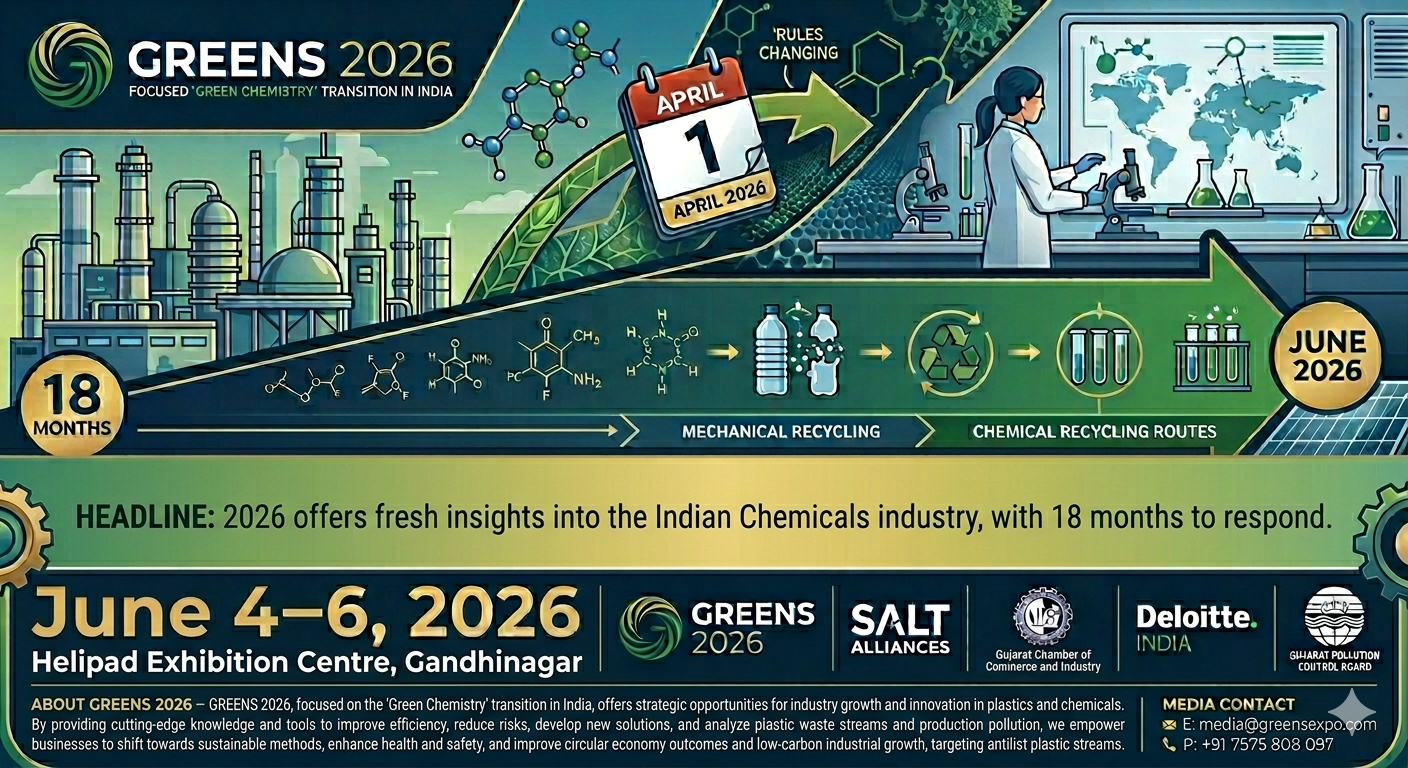
The Plastic Waste Management Rules now require 40% recycled content in food-grade PET packaging — climbing to 60% by 2028–29. That is not a sorting target. It is a chemistry target. Mechanical recycling alone cannot deliver food-grade quality at the volumes the rule will require. The Indian chemicals industry has eighteen months to scale chemical recycling routes — depolymerisation, glycolysis, enzymatic processes — at Indian cost. The Compressed Biogas Obligation tripled overnight, from 1% to 3% of national gas blending. That demand is chemistry too — anaerobic digestion kinetics, gas upgrading, sulphur and siloxane removal. The plants that get commissioned in the next eighteen months will be designed around chemistry decisions made now. And the Solid Waste Management Rules made bio-methanation of wet waste a legal requirement for every Urban Local Body, opening a new feedstock economy that depends on which chemistries can handle municipal organic streams cost-effectively.
Layer on top of this what is arriving from outside India. The European Union’s product design and digital passport requirements are already on the desks of Indian exporters across packaging, dyes, polymers, and finishes. The questions European buyers are now asking are not about machinery. They are about what chemistry went into the product, and whether it can be traced. Indian chemical manufacturers who cannot answer those questions in eighteen months will not lose audits. They will lose orders.
For the Indian chemicals industry, this is the most concentrated demand signal in a decade. Recycled-content polymers. Non-fluorinated alternatives. Bio-based intermediates. Effluent recovery chemistries. Catalysts for depolymerisation. Each of these is a market that just expanded, and each of them is a market where the supplier base has not yet caught up to the demand.
What the sector now needs is the conversation. How does an Indian polymer producer move from mechanical to chemical recycling at scale, and at cost? How does an effluent treatment chemicals supplier position into the new SWM-driven municipal market? How does a fluorochemicals manufacturer plan a transition pathway as European specifications shift? How does a CBG project sponsor specify the right digestion and upgrading chemistry for Indian feedstock variability? How does a chemicals company manage carbon credit accounting under the new domestic framework while also meeting buyer-side traceability requirements?
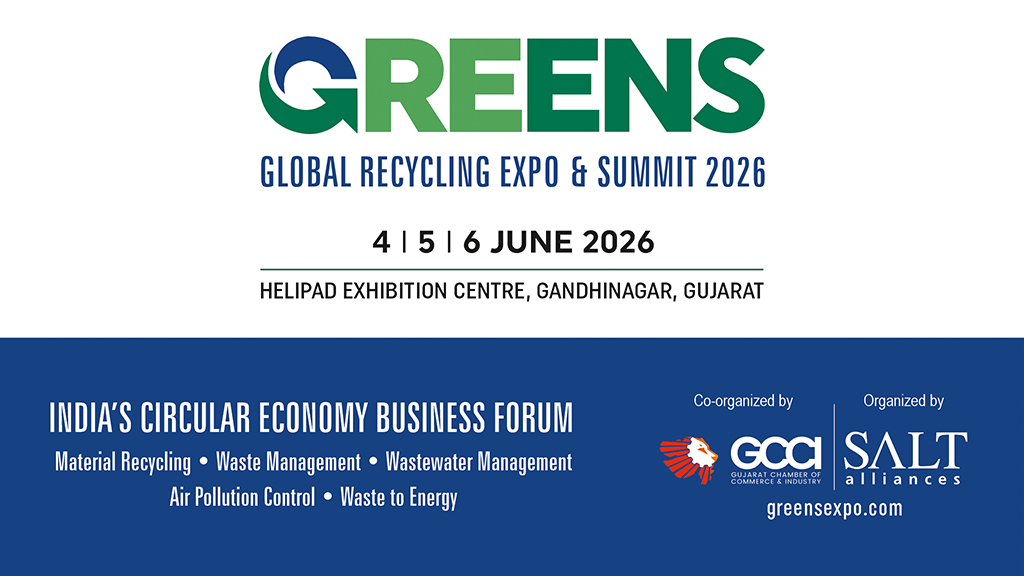
This is the conversation GREENS 2026 — the Global Recycling & Waste Management Expo & Summit has been built to host. The event opens at the Helipad Exhibition Centre, Gandhinagar, from June 4 to 6, co-organised by SALT Alliances and the Gujarat Chamber of Commerce and Industry, with Deloitte India as knowledge partner and the Gujarat Pollution Control Board as government supporter. The Plastic, Water Treatment, Waste to Energy, AI Tech, and GST & Compliance tracks have been programmed against precisely the kind of operational questions the new rules raise. The room will have polymer producers, recycling technology providers, brand owners, regulators, project finance teams, and the wider chemicals supply chain — in the same building, for three days.
The rules are in place. The hardware is getting built. Whether any of it delivers will come down to the chemistry. June 4 is where the work begins.
About GREENS 2026
GREENS is India’s national event for circular economy and waste management — bringing regulators, industry, technology, and capital into the same space across three days. The 2026 edition runs June 4–6 at the Helipad Exhibition Centre, Gandhinagar, with summit content shaped in partnership with GCCI and Deloitte India.
Media contact
Ms. Shivangi Javia · +91 7575 808 097
marketing@greensexpo.com · www.greensexpo.com