
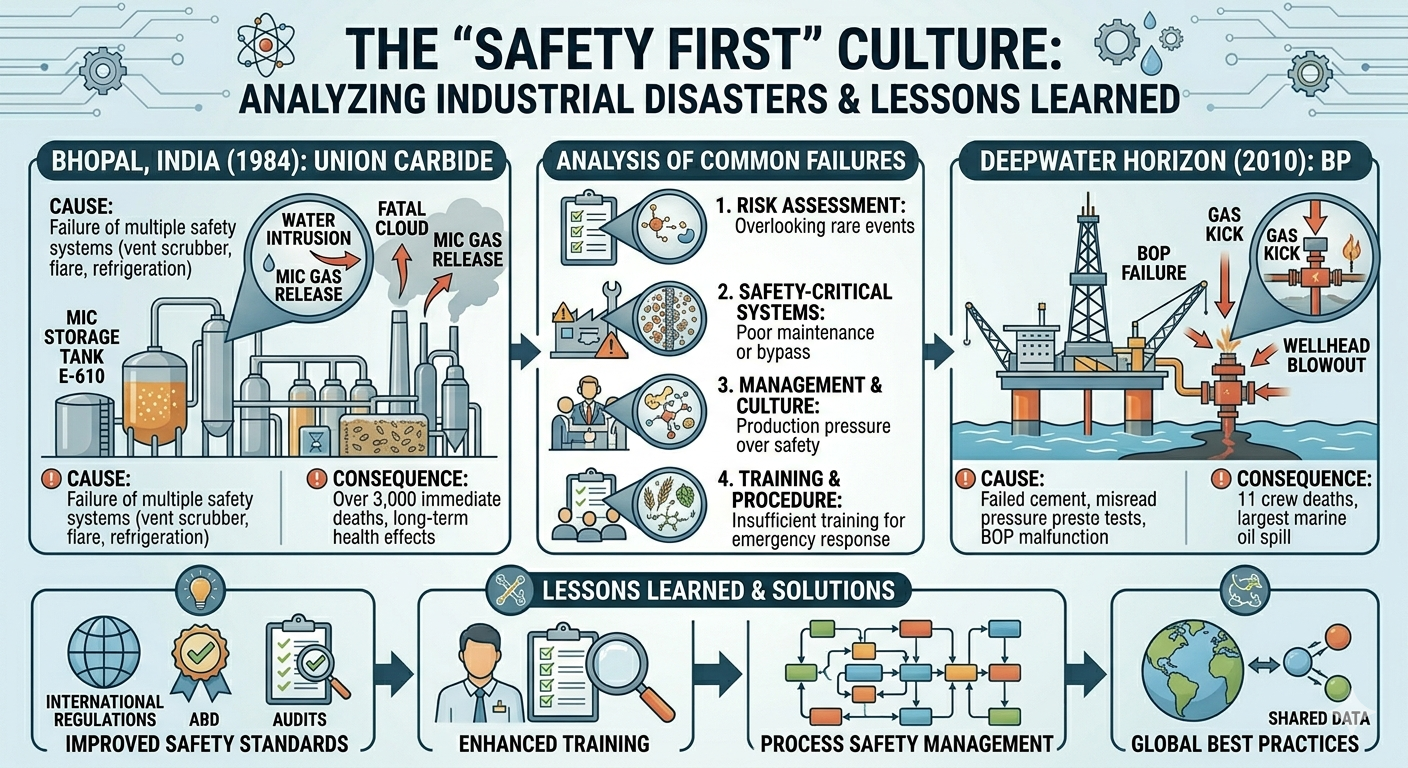
In the modern industrial world, the phrase “safety first” is often displayed on posters, printed in manuals, and repeated in meetings. Yet, history has shown that safety cannot be reduced to a slogan—it must be embedded deeply within organizational culture, decision-making, and engineering practice. The evolution of this mindset has been shaped by tragic events, most notably the Bhopal Gas Tragedy and the Deepwater Horizon oil spill. These disasters exposed critical weaknesses in industrial systems and forced industries worldwide to rethink how safety is managed.
A true “safety first” culture goes beyond compliance with regulations. It involves a proactive approach to identifying risks, maintaining systems, training personnel, and ensuring that safety is never compromised for cost, speed, or convenience. By analyzing past failures, industries can better understand how to prevent future catastrophes.
Understanding Safety Culture
Safety culture refers to the shared values, beliefs, and behaviors that determine how an organization manages risk. It encompasses both process safety, which focuses on preventing catastrophic incidents such as explosions or toxic releases, and occupational safety, which deals with everyday workplace hazards.
In a strong safety culture:
- Employees feel empowered to report hazards without fear
- Leadership prioritizes safety in decision-making
- Systems are designed with multiple layers of protection
- Continuous learning and improvement are encouraged
Conversely, a weak safety culture often tolerates shortcuts, ignores warning signs, and prioritizes production over protection. Many industrial disasters can be traced back to such cultural deficiencies.
Case Study 1: The Bhopal Gas Tragedy
The Bhopal Gas Tragedy remains one of the most devastating industrial accidents in history. A leak of methyl isocyanate (MIC), a highly toxic chemical, from a pesticide plant resulted in thousands of immediate deaths and long-term health effects for hundreds of thousands of people.
Causes and Failures
Several factors contributed to the disaster:
1. Failure of Safety Systems
Critical safety mechanisms, including refrigeration units, gas scrubbers, and flare systems, were either turned off or not functioning properly. These systems were designed to neutralize or contain toxic releases but failed when needed most.
2. Cost-Cutting and Maintenance Issues
In an effort to reduce operational costs, maintenance was neglected, and staffing levels were reduced. This led to deteriorating equipment and a lack of oversight.
3. Inadequate Training
Plant operators were not sufficiently trained to handle emergency situations or recognize early warning signs of a leak.
4. Poor Emergency Preparedness
The surrounding community was unaware of the risks and had no clear plan for responding to a chemical release.
Lessons Learned
The Bhopal disaster highlighted the importance of:
- Maintaining and testing safety systems regularly
- Conducting thorough hazard analyses
- Ensuring proper training and supervision
- Considering the safety of nearby communities
It also underscored the ethical responsibility of companies to prioritize human life over profit.
Case Study 2: Deepwater Horizon Oil Spill
The Deepwater Horizon oil spill is another landmark event that reshaped safety practices, particularly in the oil and gas industry. The explosion on an offshore drilling rig led to the loss of lives and one of the largest environmental disasters in history.
Causes and Failures
1. Well Integrity Issues
Improper cementing allowed hydrocarbons to enter the well, leading to a blowout.
2. Misinterpretation of Data
Critical pressure test results were incorrectly interpreted, leading to false confidence in the system’s integrity.
3. Failure of the Blowout Preventer
The blowout preventer, a crucial safety device, did not function as intended, removing the last line of defense.
4. Organizational Pressure
Time and cost pressures influenced decisions, leading to compromised safety standards.
Lessons Learned
The disaster emphasized:
- The importance of multiple independent safety barriers
- The need for rigorous data analysis and verification
- The role of human factors in decision-making
- The necessity of reliable emergency systems
Common Patterns in Industrial Disasters
Despite differences in context, major industrial accidents often share similar underlying causes:
Normalization of Deviance
Over time, unsafe practices become accepted as normal because they do not immediately result in failure. This gradual erosion of standards can lead to catastrophic outcomes.
Weak Safety Systems
Safety mechanisms may exist but are poorly maintained, bypassed, or misunderstood.
Communication Breakdowns
Critical information may not reach decision-makers, or warnings may be ignored.
Production Pressure
Deadlines and financial targets can lead to compromised safety decisions.
Inadequate Risk Assessment
Hazards may be underestimated or not revisited as conditions change.
Building a “Safety First” Culture
Creating a strong safety culture requires a comprehensive and sustained effort across all levels of an organization.
Leadership Commitment
Leaders must demonstrate that safety is a top priority by allocating resources, setting clear expectations, and leading by example.
Process Safety Management
A structured approach to managing hazards includes:
- Hazard identification techniques such as HAZOP
- Regular maintenance and inspection
- Incident investigation and learning
- Management of change procedures
Layers of Protection
Effective systems incorporate multiple safeguards:
- Preventive measures to avoid incidents
- Protective systems to control them
- Mitigation strategies to reduce impact
Learning from Near-Misses
Near-misses provide valuable insights into potential failures. Encouraging reporting and analysis of these events helps prevent future incidents.
Human Factors Engineering
Designing systems with human limitations in mind improves safety. This includes clear procedures, intuitive interfaces, and realistic training programs.
Continuous Monitoring and Improvement
Regular audits and performance reviews ensure that safety systems remain effective and up to date.
The Role of Regulation
In the aftermath of major disasters, governments often introduce stricter regulations and standards. These measures improve safety but are not sufficient on their own. Organizations must go beyond compliance and integrate safety into their core values and operations.
The Human and Environmental Impact
Industrial disasters have far-reaching consequences beyond immediate damage. They result in:
- Loss of life and injury
- Long-term health effects
- Environmental degradation
- Economic and social disruption
These impacts highlight the importance of proactive safety measures and responsible industrial practices.
Conclusion
The concept of “safety first” is not merely a guideline—it is a necessity for modern industry. The lessons learned from tragedies such as the Bhopal Gas Tragedy and the Deepwater Horizon oil spill demonstrate that most industrial accidents are preventable with proper planning, maintenance, and decision-making.
A true safety culture requires commitment, vigilance, and continuous improvement. It demands that organizations prioritize human life and environmental protection above all else. By learning from the past and applying these lessons, industries can move toward a safer and more sustainable future, ensuring that such tragedies are not repeated.