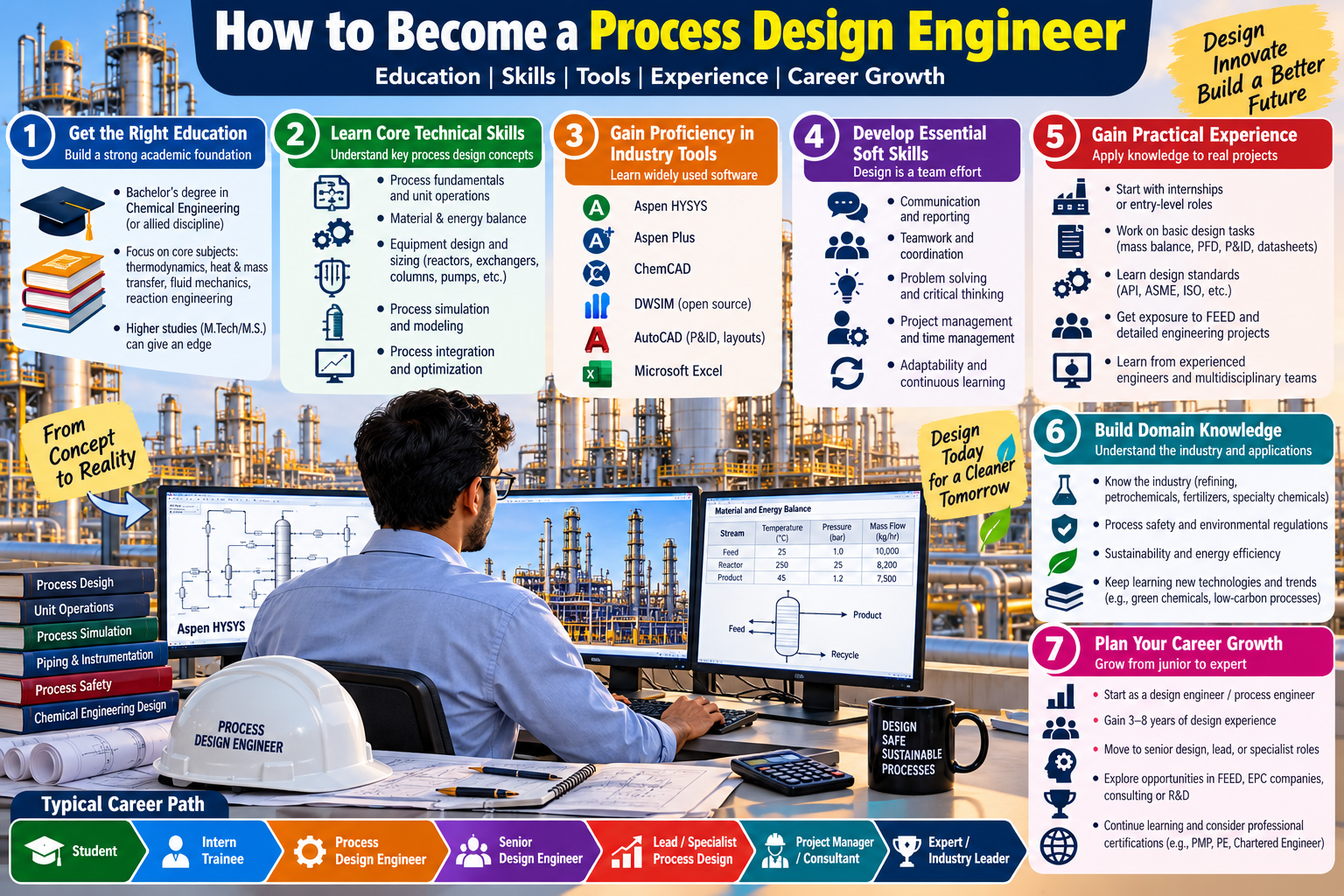
Introduction
Process design engineering is one of the most important career fields in chemical engineering. Process design engineers are responsible for developing safe, efficient, economical, and technically feasible industrial processes used in chemical plants, refineries, petrochemical complexes, fertilizer manufacturing facilities, and pharmaceutical industries.
Unlike plant operations engineers, who primarily manage existing production facilities, process design engineers focus on developing new processes, selecting equipment, preparing engineering documents, and improving existing plant configurations.
Becoming a successful process design engineer requires strong chemical engineering fundamentals, practical industrial knowledge, engineering calculations, and proficiency in process simulation software.
This article explains how to become a process design engineer, including educational qualifications, essential technical skills, engineering software, equipment design calculations, and a step-by-step career roadmap.
1. Understand the Role of a Process Design Engineer
A process design engineer converts process requirements into technically feasible engineering designs.
Their responsibilities begin with understanding raw materials, product specifications, production capacity, operating conditions, and safety requirements.
Based on these inputs, engineers develop process configurations, perform calculations, and prepare technical documentation.
Major responsibilities include preparing Process Flow Diagrams (PFDs), developing Piping and Instrumentation Diagrams (P&IDs), calculating material and energy balances, and sizing process equipment.
They also prepare equipment datasheets, utility consumption estimates, process descriptions, and technical specifications.
Process design engineers frequently collaborate with mechanical, piping, instrumentation, electrical, civil, and project engineering teams.
2. Obtain the Required Educational Qualifications
A bachelor’s degree in chemical engineering is the most common educational qualification for entering process design engineering.
A B.Tech or B.E. in Chemical Engineering provides essential knowledge of thermodynamics, fluid mechanics, heat transfer, mass transfer, chemical reaction engineering, and process control.
An M.Tech or M.E. in Chemical Engineering can provide additional specialization, particularly in process simulation, advanced separation processes, and equipment design.
However, a postgraduate degree is not mandatory for many entry-level process design positions.
Students should focus on understanding engineering principles rather than memorizing formulas.
Industrial internships, plant visits, and academic design projects provide valuable practical exposure.
3. Develop Strong Chemical Engineering Fundamentals
Strong fundamentals are essential because process design decisions depend on scientific and engineering calculations.
Thermodynamics helps engineers predict phase equilibrium, energy requirements, and fluid properties.
Fluid mechanics supports pipeline sizing, pump selection, pressure drop calculations, and hydraulic system design.
Heat transfer is required for designing heat exchangers, evaporators, condensers, and heating systems.
Mass transfer principles are essential for distillation, absorption, extraction, drying, and separation processes.
Chemical reaction engineering helps determine reactor volume, conversion, reaction kinetics, and residence time.
A successful process design engineer must understand how these subjects interact within a complete industrial process.
4. Learn Material and Energy Balance Calculations
Material and energy balances form the foundation of process design.
Before selecting equipment, engineers must determine the quantities of raw materials, products, by-products, and utilities required.
The general material balance equation is:
Input + Generation − Output − Consumption = Accumulation
For steady-state systems, accumulation is zero.
Energy balance calculations determine heating duties, cooling requirements, steam consumption, and energy losses.
For example, designing a phosphoric acid plant requires calculating phosphate rock consumption, sulphuric acid requirements, gypsum generation, reaction heat, and evaporation duties.
Engineers should practice solving complete plant material balances rather than only individual equipment calculations.
These calculations become the foundation for process simulation and equipment sizing.
5. Master Process Flow Diagrams and P&IDs
Process Flow Diagrams (PFDs) and Piping and Instrumentation Diagrams (P&IDs) are essential engineering documents.
A PFD represents major equipment, process streams, operating temperatures, pressures, and material flow rates.
A P&ID provides detailed information about pipelines, valves, instruments, control loops, equipment connections, and safety systems.
Process design engineers should understand equipment symbols, piping specifications, control valve arrangements, isolation requirements, and instrumentation philosophy.
They should also learn how engineering drawings evolve from conceptual design to detailed engineering.
Regular practice with industrial drawings develops the ability to visualize complex processes and identify potential design problems.
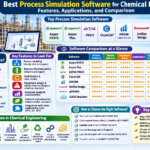
6. Learn Process Simulation Software
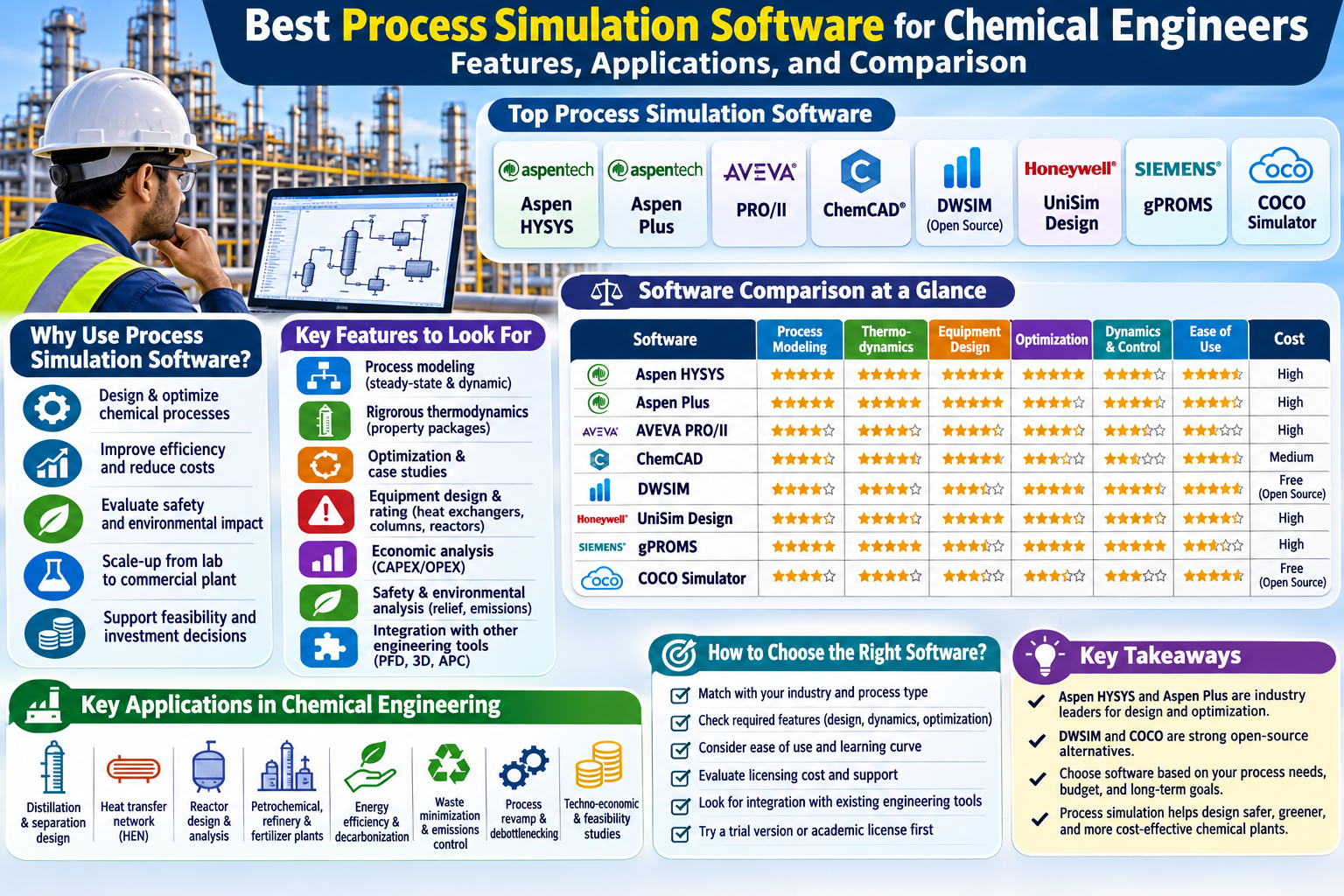
Process simulation software allows engineers to model chemical processes, predict operating conditions, and evaluate design alternatives.
Important software includes Aspen Plus, Aspen HYSYS, CHEMCAD, and DWSIM.
Aspen Plus is widely used for chemical process modeling, while Aspen HYSYS is commonly associated with oil, gas, and hydrocarbon processing applications.
Engineers should learn component selection, thermodynamic property methods, unit operation modeling, convergence, and sensitivity analysis.
Simulation results must be verified using engineering calculations and reliable physical property data.
Software proficiency is valuable, but understanding the underlying process remains more important than operating the software interface.
7. Develop Equipment Sizing Skills
Equipment sizing converts process calculations into practical engineering requirements.
Important equipment includes reactors, heat exchangers, distillation columns, pumps, storage tanks, filters, and evaporators.
For example, preliminary reactor volume can be estimated using:
Reactor Volume = Volumetric Flow Rate × Residence Time
This relationship is applicable to appropriate continuous-flow systems, subject to reaction kinetics and design considerations.
Heat exchanger calculations use:
Q = U × A × LMTD × F
Where Q represents heat duty, U is the overall heat transfer coefficient, A is heat transfer area, LMTD is logarithmic mean temperature difference, and F is the correction factor.
Engineers must also understand design margins, materials of construction, corrosion allowances, and applicable engineering standards.
8. Understand Process Safety Engineering
Safety must be incorporated during the initial design stage rather than after equipment installation.
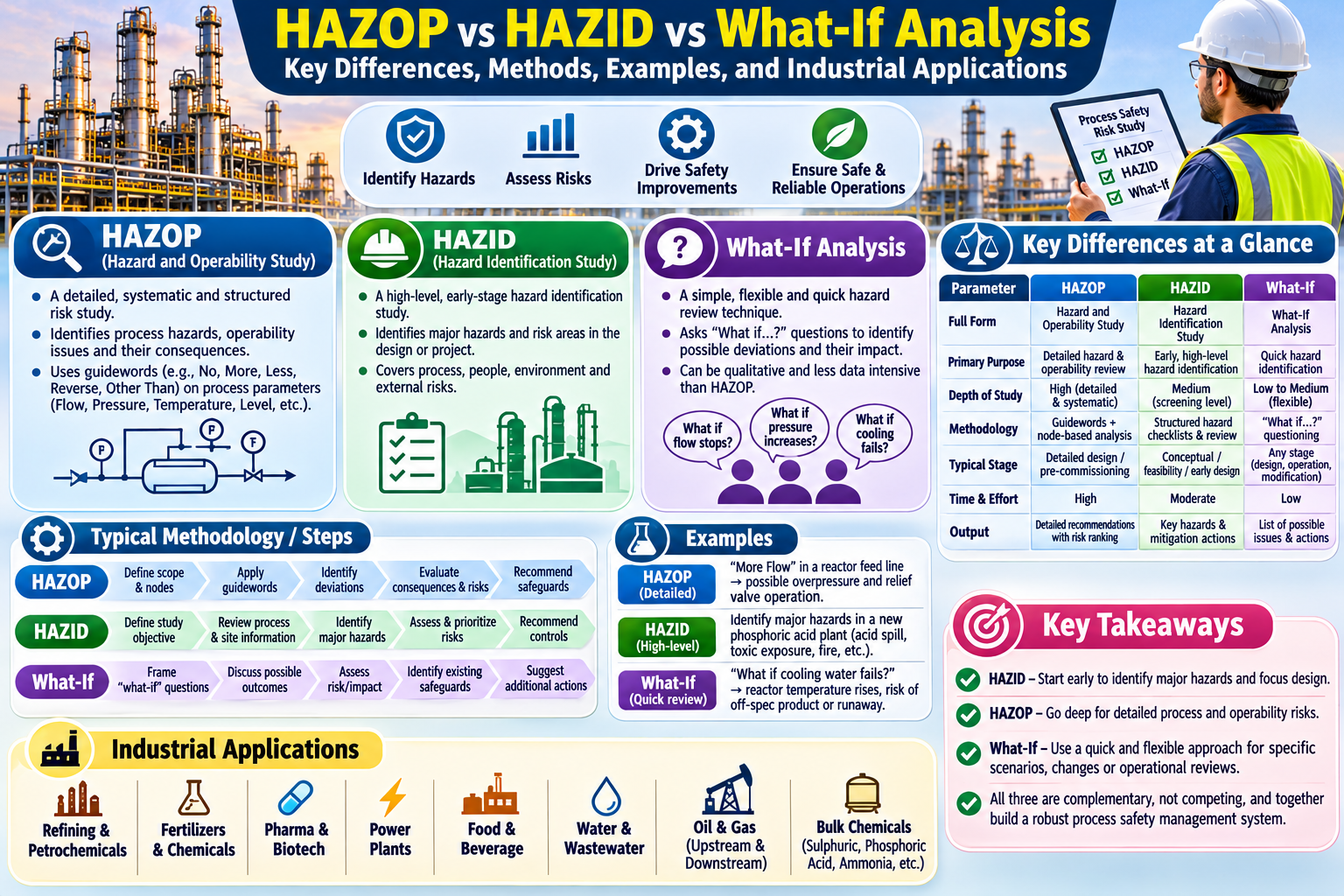
Process design engineers should understand Hazard and Operability Studies (HAZOP), process hazard analysis, pressure relief systems, and inherently safer design principles.
They must consider abnormal operating conditions, equipment failures, thermal expansion, overpressure, and loss of utilities.
Important safety-related design activities include identifying relief scenarios, specifying protective systems, and evaluating emergency shutdown requirements.
Knowledge of relevant API, ASME, IEC, and other applicable standards is valuable.
Formal process safety training can strengthen these capabilities.
9. Gain Practical Industrial Experience
Practical plant experience significantly improves process design capabilities.
Working in plant operations, commissioning, technical services, or process optimization helps engineers understand actual equipment behavior.
Field experience provides exposure to operating limitations, maintenance challenges, instrumentation problems, and process disturbances.
For example, an engineer with experience operating evaporators may better understand fouling, vacuum instability, circulation limitations, and steam consumption.
Such knowledge supports more realistic engineering decisions.
Fresh graduates can develop practical experience through internships, graduate engineering trainee programs, and industrial projects.
10. Understand Engineering Project Stages
Process design engineers participate in different stages of industrial projects.
Conceptual engineering establishes the process route, preliminary equipment requirements, and technical feasibility.
Front-End Engineering Design (FEED) develops the process configuration, major equipment specifications, and project cost estimates.
Detailed engineering produces finalized documents required for procurement, construction, and installation.
Engineers may also support equipment procurement, vendor document reviews, commissioning, and performance testing.
Understanding project execution helps process engineers coordinate effectively with other engineering disciplines.
11. Develop Technical Documentation Skills
Technical documentation is an essential responsibility in process engineering.
Common deliverables include design basis documents, process descriptions, heat and material balances, equipment datasheets, utility summaries, and process calculations.
Engineers may also prepare line lists, instrument datasheets, control narratives, and operating philosophies.
Documents should clearly identify assumptions, design conditions, calculation methods, and applicable standards.
Strong documentation practices improve engineering accuracy, communication, and project traceability.
12. Build a Process Design Engineering Portfolio
A technical portfolio can demonstrate practical engineering capabilities to potential employers.
Students and early-career engineers can develop projects involving pump sizing, heat exchanger design, reactor sizing, distillation simulation, and complete plant material balances.
A strong portfolio should contain the design basis, calculations, assumptions, process diagrams, and engineering conclusions.
For example, designing a hypothetical 100-tonne-per-day chemical manufacturing facility can demonstrate the ability to integrate multiple engineering disciplines.
Projects should use clearly identified assumptions and publicly available technical information.
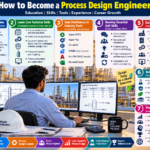
13. Follow a Structured Career Roadmap
Aspiring process design engineers can follow a structured learning plan.
First three months: Strengthen chemical engineering fundamentals, material balances, energy balances, and engineering calculations.
Months four to six: Learn PFDs, P&IDs, equipment sizing, piping hydraulics, and process instrumentation.
Months seven to nine: Develop proficiency in process simulation software and complete practical simulation exercises.
Months ten to twelve: Study process safety, prepare engineering deliverables, and develop a technical portfolio.
This twelve-month roadmap is an illustrative learning schedule rather than a guaranteed employment timeline.
Career opportunities include graduate process engineer, junior process design engineer, process simulation engineer, and process engineering trainee.
With experience, engineers may progress into senior process engineering, lead engineering, project management, or technical consultancy.
Conclusion
Becoming a process design engineer requires a combination of chemical engineering knowledge, calculation skills, software proficiency, and practical industrial experience.
The most important competencies include material and energy balances, PFD and P&ID preparation, process simulation, equipment sizing, and process safety engineering.
Engineers should develop the ability to transform process requirements into safe, reliable, and economically practical designs.
Continuous learning, practical project experience, and strong technical documentation skills can create valuable career opportunities across chemical, fertilizer, pharmaceutical, petrochemical, and energy industries.
Ultimately, a successful process design engineer combines theoretical understanding with practical engineering judgment to develop efficient and sustainable industrial processes.