


Bridging the Gap Between Engineering Theory and Industrial Reality
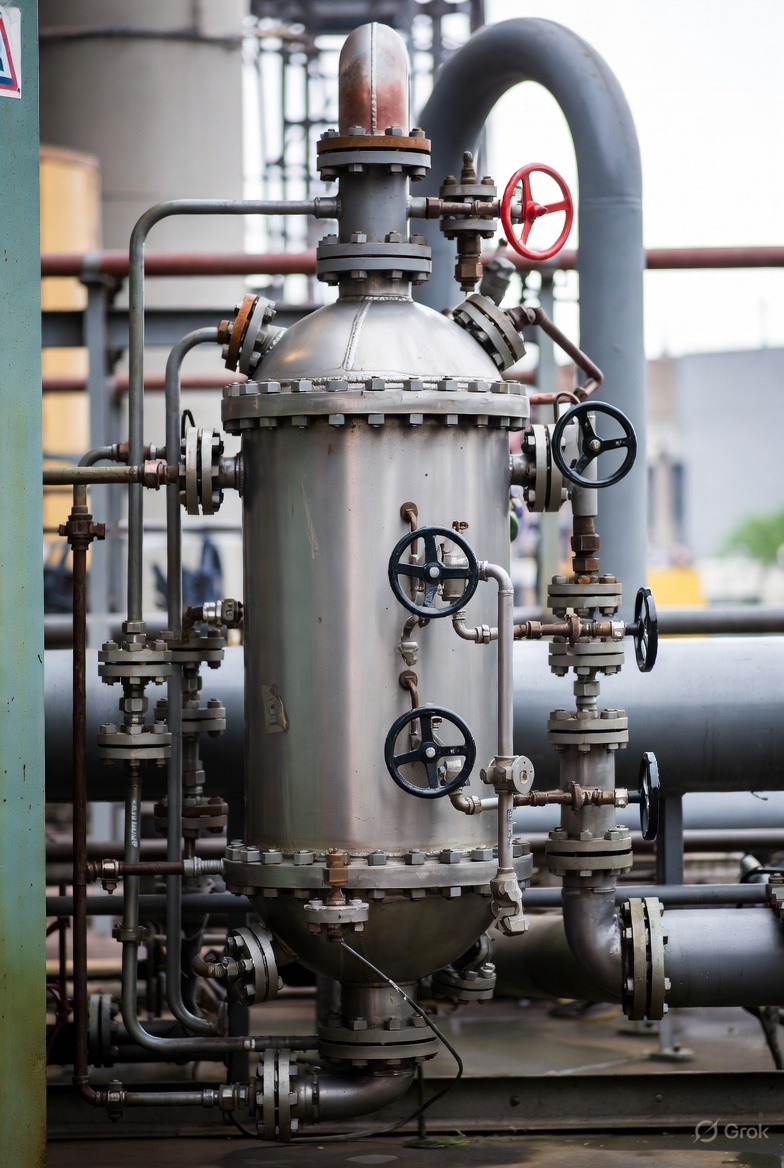
Heat exchangers are the silent workhorses of industry. Found in chemical plants, refineries, fertilizer units, acid plants, power stations, food processing facilities, and HVAC systems, they enable energy transfer between fluids without direct mixing. Their role is fundamental: recover heat, improve energy efficiency, maintain reaction temperatures, condense vapors, and control process stability.
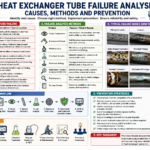
On paper, heat exchangers are robustly engineered. They are designed using conservative codes, corrosion allowances, fouling factors, vibration analysis, and mechanical safety margins. Standards such as ASME and TEMA guide their construction. Yet in real industrial settings, heat exchangers often fail much earlier than expected.
Tube leaks, excessive fouling, vibration damage, gasket failures, corrosion pitting, and thermal fatigue are frequent operational challenges. This persistent mismatch between predicted design life and actual service life raises an important question:
Why do heat exchangers fail more often than engineering calculations predict?
The answer lies in the complex interaction between design assumptions and real-world operational conditions.
The Limits of Design Assumptions
Heat exchanger design is typically based on steady-state calculations. Engineers assume:
Stable operating temperatures
Constant flow rates
Clean heat transfer surfaces
Uniform corrosion rates
Ideal flow distribution
Controlled fluid chemistry
However, industrial plants rarely operate under perfectly steady conditions. Process upsets, feedstock variability, shutdowns, startups, and production changes introduce dynamic stresses that are difficult to predict during the design phase.
Even small deviations from assumptions can trigger degradation mechanisms that were underestimated or not fully accounted for in calculations.
Fouling: The Hidden Degradation Mechanism
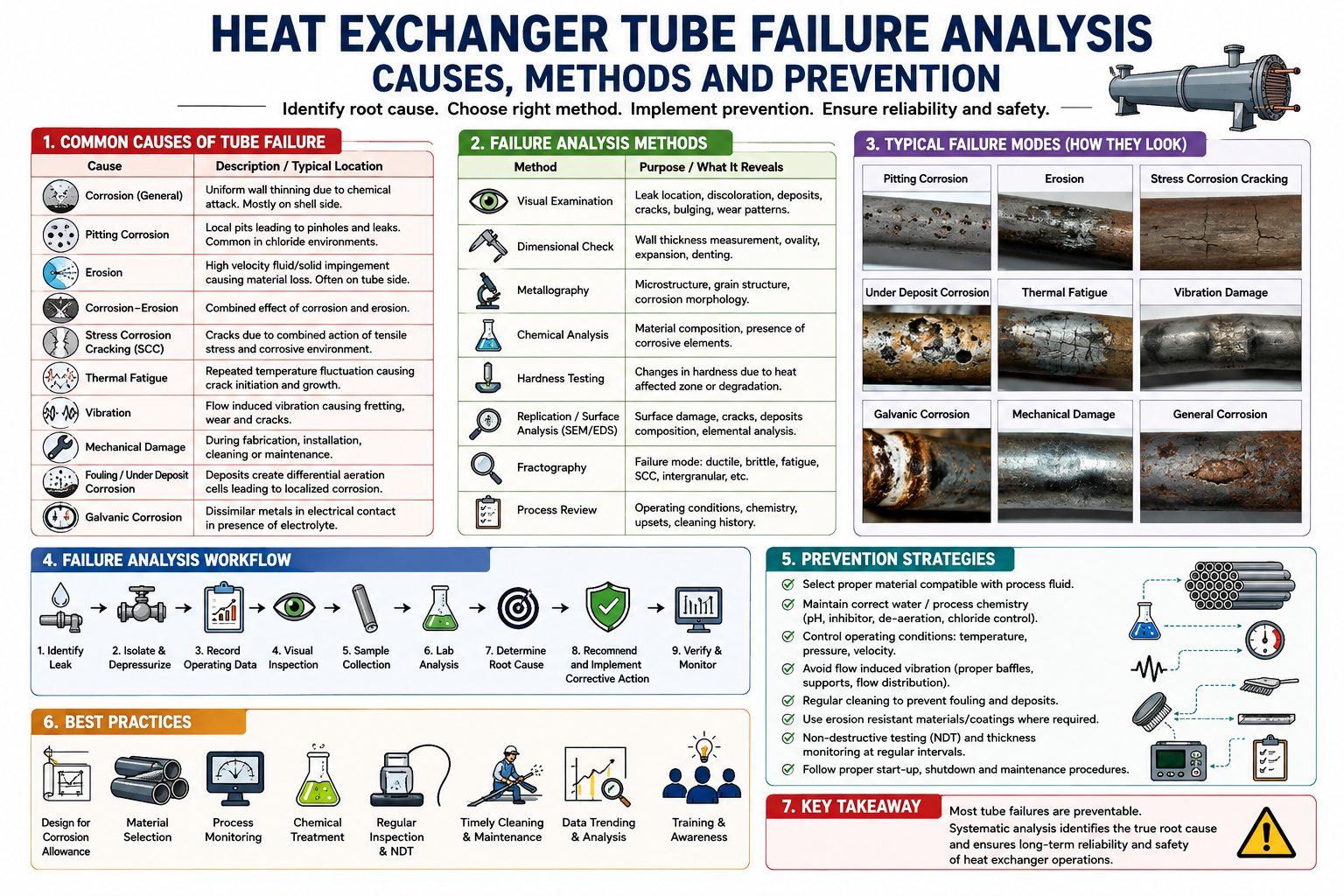
One of the most common and underestimated causes of premature failure is fouling. Fouling occurs when unwanted materials deposit on heat transfer surfaces. These deposits may include:
Mineral scale
Corrosion byproducts
Polymerized chemicals
Coke formation
Biological growth
Suspended solids
Designers incorporate a “fouling factor” into calculations, assuming a predictable resistance layer. However, actual fouling behavior is highly nonlinear and influenced by fluid composition, temperature gradients, and flow patterns.
As fouling builds up:
Heat transfer efficiency drops
Surface temperatures rise
Pressure drop increases
Flow becomes uneven
Elevated surface temperatures may exceed material limits, causing localized overheating and accelerating corrosion. Under-deposit corrosion is especially dangerous because it progresses unseen beneath fouling layers. In many cases, exchanger failure is not structural at first—it begins as a performance issue that escalates into mechanical damage.
Corrosion Complexity Beyond Average Rates
Corrosion is rarely uniform. Design corrosion allowances assume steady material thinning over time. In practice, localized corrosion mechanisms dominate.
Unexpected impurities, small pH changes, oxygen ingress, chloride spikes, or process contamination can trigger:
Pitting corrosion
Crevice corrosion
Galvanic corrosion
Stress corrosion cracking
Localized corrosion is particularly hazardous because it penetrates deeply in small areas, leading to sudden tube rupture without significant overall wall thinning.
For example, stainless steel may perform adequately under expected chloride levels, but minor concentration increases can initiate stress corrosion cracking. Similarly, carbon steel exposed to fluctuating oxygen levels may experience rapid localized attack.
Corrosion prediction remains partly empirical. Even with material compatibility charts and laboratory data, real plant chemistry often introduces variables that are difficult to anticipate.
Thermal Fatigue and Operational Cycling
Many heat exchangers are designed for steady thermal gradients. Yet modern industrial operations are rarely steady. Plants undergo frequent startups, shutdowns, and load variations.
Each thermal cycle causes expansion and contraction of tubes, tube sheets, shells, and weld joints. Differences in thermal expansion between materials create cyclic stresses. Over time, microscopic cracks form and propagate—a process known as thermal fatigue.
Thermal fatigue commonly affects:
Tube-to-tube sheet joints
Weld seams
Expansion joints
Gasket seating surfaces
Unlike corrosion, thermal fatigue does not depend on chemical attack. It is purely mechanical but equally destructive. Because fatigue damage accumulates gradually, failure may occur long before the nominal design life is reached.
Flow-Induced Vibration
Flow-induced vibration (FIV) is another major contributor to heat exchanger failure. When fluid velocity exceeds certain thresholds, vortex shedding and turbulence can induce tube vibration.
Two primary vibration mechanisms include:
Vortex-induced vibration
Fluid-elastic instability
Continuous vibration causes tube wear at support points and baffle contacts. Eventually, fatigue cracking or tube-to-tube collision leads to leaks.
While designers perform vibration analysis, real operating conditions may differ significantly. Partial fouling, uneven flow distribution, or unexpected two-phase flow patterns can alter hydrodynamic behavior.
Once vibration begins, failure may accelerate rapidly.
Two-Phase Flow Challenges
Many exchangers operate under condensation or boiling conditions. Two-phase flow introduces additional complexities such as:
Slug flow
Vapor blanketing
Dry-out zones
Flow instability
Uneven phase distribution can create localized hot spots. In boiling systems, vapor pockets may reduce heat transfer efficiency, leading to overheating of specific areas.
Predicting two-phase flow behavior accurately is challenging due to its dynamic and unstable nature. Design models often simplify assumptions, which may not capture real-world fluctuations.
Material Selection and Economic Constraints
Material selection is a critical design decision influenced by cost, availability, and expected service conditions. While exotic alloys may provide superior corrosion resistance, economic constraints often favor carbon steel or lower-cost stainless grades.
If process conditions change over time—such as increased throughput, higher temperatures, or different feedstocks—the originally selected material may become inadequate.
Cost-driven material compromise is a recurring cause of premature failure. Short-term savings can lead to long-term reliability issues.
Maintenance Practices and Operational Discipline
Design life assumes proper maintenance. However, real-world practices may differ due to production pressures or budget limitations.
Common maintenance-related issues include:
Delayed cleaning schedules
Inadequate inspection frequency
Aggressive mechanical cleaning causing tube damage
Improper chemical cleaning introducing corrosion
Even minor negligence can accelerate degradation mechanisms that design margins cannot absorb.
Operational discipline is equally important. Exceeding design velocity limits or operating outside temperature ranges—even temporarily—can have cumulative effects.
Gasket and Sealing Failures
Not all exchanger failures originate in tubes. Gaskets and seals are frequent points of weakness.
Improper bolt tightening, thermal cycling, chemical degradation, or aging can cause leakage. Small leaks may lead to external corrosion, insulation damage, or safety hazards.
Sealing systems must accommodate differential thermal expansion and pressure fluctuations. If not properly maintained, they become critical failure points.
Interaction of Multiple Stresses
Heat exchangers are multi-stress equipment. They simultaneously experience:
Thermal stress
Mechanical loading
Chemical attack
Flow turbulence
Pressure cycling
Design calculations typically evaluate these stresses individually. In reality, they interact and amplify each other.
For example, fouling may increase temperature, which accelerates corrosion, which weakens material, which makes it more susceptible to vibration fatigue. This cascading effect is difficult to capture in isolated calculations.
Monitoring Gaps and Predictive Limitations
Modern predictive maintenance technologies can significantly reduce failure rates, but many facilities still rely on periodic inspection rather than continuous monitoring.
Advanced techniques such as:
Online thickness measurement
Vibration monitoring
Temperature mapping
Fouling trend analysis
Digital twin simulations
can provide early warning signals. Without such monitoring, degradation remains hidden until failure becomes unavoidable.
Closing the Design-Reality Gap
To reduce premature failure, industries must move beyond static design thinking. Key strategies include:
Improved fouling modeling based on real operational data
Conservative velocity limits to reduce vibration risk
Upgrading materials in high-risk areas
Continuous monitoring for early detection
Strong root cause analysis culture
Regular inspection and disciplined maintenance
Reliability must be managed actively throughout the equipment lifecycle—not assumed from initial design margins.
Conclusion
Heat exchangers fail more often than design predicts because real industrial environments are far more complex than theoretical models. Design assumptions rely on steady conditions, predictable chemistry, and ideal flow behavior. In contrast, actual operations involve variability, disturbances, human decisions, and interacting stress mechanisms.
Fouling, corrosion, vibration, thermal fatigue, material limitations, and maintenance practices collectively shorten service life. No single factor is usually responsible; rather, it is the cumulative effect of multiple stresses.
Understanding this gap between theory and practice is essential for improving reliability. By integrating better monitoring, adaptive maintenance strategies, and realistic operational awareness, industries can align actual performance more closely with design expectations.
Ultimately, a heat exchanger is not just a static device—it is a dynamic system constantly subjected to thermal, mechanical, and chemical forces. Its longevity depends not only on sound design but on vigilant operation and proactive lifecycle management.