

In the world of chemical engineering, few concepts are as intellectually appealing as reactive distillation. The idea seems almost too elegant: instead of performing a reaction in one vessel and separating products in another, why not do both in the same column? By integrating chemical transformation and distillation into a single unit operation, reactive distillation promises higher efficiency, lower capital cost, reduced energy consumption, and improved conversion.
For years, it was heralded as a breakthrough in process intensification. Yet despite its promise, reactive distillation did not become a universal design standard. Some installations succeeded spectacularly, while others struggled with control instability, fouling, or disappointing economics.
Today, however, reactive distillation is experiencing a strategic comeback. With rising energy prices, sustainability mandates, and the demand for compact plant layouts, engineers are revisiting this technology—not as a blanket solution, but as a targeted optimization tool.
The key is understanding where reactive distillation truly makes sense—and where it does not.
The Core Principle Behind Reactive Distillation
Reactive distillation combines two fundamental operations:
Chemical reaction, typically occurring in the liquid phase with a catalyst.
Distillation, separating components based on volatility differences.
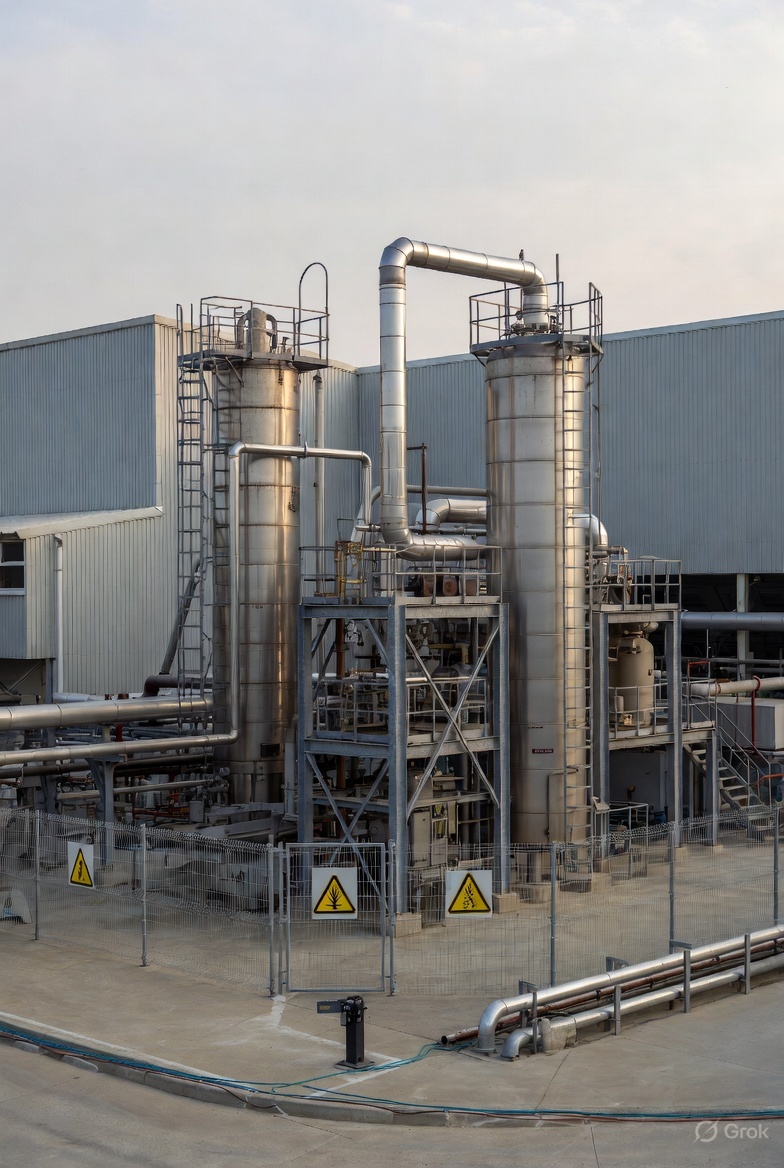
In a reactive distillation column, catalytic packing or reactive trays are placed within certain sections of the column. Reactants are fed into the column, react within the catalytic zone, and the products are separated continuously by vapor–liquid equilibrium.
The critical advantage arises from equilibrium shifting. In reversible reactions, product removal through distillation drives the reaction forward according to Le Chatelier’s principle. Instead of being limited by thermodynamic equilibrium in a standalone reactor, the system continuously removes products, allowing higher overall conversion.
In theory, this reduces recycle streams, lowers energy use, and simplifies plant design.
Why Reactive Distillation Didn’t Dominate Everywhere
Despite its theoretical appeal, reactive distillation faced practical limitations in many early implementations.
Overenthusiastic Application
In some cases, engineers attempted to apply reactive distillation to systems that lacked favorable thermodynamics or volatility differences. Without a clear separation advantage, the column became inefficient and complex.
Control Challenges
In conventional plants, reaction and separation are controlled independently. In reactive distillation, temperature, composition, and reaction rate are tightly coupled. A change in feed composition affects both reaction kinetics and vapor–liquid equilibrium simultaneously.
This interdependence makes control more challenging, particularly during startup or load changes.
Catalyst and Fouling Issues
Catalyst placement inside a distillation column complicates maintenance. If deactivation or fouling occurs, shutdown and catalyst replacement can be costly.
In systems prone to polymerization or heavy byproduct formation, reactive distillation becomes risky.
Scale-Up Uncertainty
Scaling reactive distillation columns requires careful hydrodynamic and kinetic modeling. Earlier limitations in simulation tools made design predictions less reliable.
These challenges led many companies to favor the safety and familiarity of conventional reactor–distillation sequences.
The Conditions for Success
The modern resurgence of reactive distillation is built on better understanding. Engineers now recognize that the technology thrives only under specific conditions.
1. Equilibrium-Limited Reactions
Reactive distillation works best for reversible reactions where equilibrium limits conversion in traditional reactors.
Esterification and etherification are prime examples. By removing water or other products as they form, the reaction equilibrium shifts toward completion.
If the reaction is already irreversible and proceeds to near-complete conversion in a reactor, reactive distillation provides little added benefit.
2. Favorable Volatility Differences
Separation efficiency is critical. The reactants and products must exhibit meaningful differences in boiling points.
Ideal scenarios include:
One reactant or product is light and exits overhead.
Another component is heavier and exits at the bottom.
When volatility differences are minimal, the column requires excessive reflux and stages, eliminating energy advantages.
The alignment between reaction chemistry and vapor–liquid equilibrium behavior determines feasibility.
3. Moderate Reaction Heat
Reactive distillation columns can dissipate reaction heat through vaporization. The latent heat of vaporization acts as a natural temperature control mechanism.
However, highly exothermic reactions risk hot spots or runaway conditions inside the column. Systems with moderate heat release are more suitable.
4. Liquid-Phase Catalytic Systems
Most successful reactive distillation processes involve liquid-phase reactions using solid catalysts embedded in structured packing.
Gas-phase reactions or those requiring extreme pressures are typically less compatible with distillation-based integration.
Where Reactive Distillation Clearly Works
Certain industrial applications have demonstrated sustained success.
Ether Production
The production of methyl tert-butyl ether (MTBE) is one of the most cited examples. The reaction between isobutene and methanol benefits from favorable volatility differences and equilibrium shifting.
In this system, reactive distillation achieves high conversion and efficient separation in a single column.
Esterification Processes
Ester production for solvents, plasticizers, and specialty chemicals often involves reversible reactions that produce water. Removing water through distillation significantly enhances yield.
Reactive distillation simplifies these systems and reduces downstream dehydration requirements.
Biodiesel and Bio-Based Chemicals
Transesterification reactions in biodiesel production can benefit from integrated separation. As the industry pushes toward more sustainable fuels and bio-derived chemicals, compact and energy-efficient processes become more attractive.
Where It Doesn’t Make Sense
Reactive distillation is not a universal intensification tool.
It is generally unsuitable for:
Very slow kinetics requiring long residence times.
Highly fouling systems with heavy byproducts.
Reactions producing solids.
Extremely narrow volatility differences.
Very high-pressure operations.
In such cases, separate reactors allow better control and easier maintenance.
Recognizing limitations is essential to avoiding costly misapplications.
Modern Drivers Behind the Comeback
Several contemporary trends are reviving interest in reactive distillation.
Energy Efficiency and Carbon Reduction
Integrated systems reduce heating and cooling between separate units. By eliminating intermediate heat exchangers and reducing reboiler duty, overall energy consumption can decline.
As companies pursue net-zero emissions goals, process intensification strategies gain strategic importance.
Improved Modeling and Simulation
Today’s advanced process simulation software can model reactive distillation with far greater accuracy than in the past. Engineers can simulate mass transfer, reaction kinetics, and dynamic control behavior before construction.
This reduces technical risk and improves design confidence.
Advanced Catalytic Packings
Modern structured packings combine high surface area with catalytic functionality. These packings improve mass transfer and provide stable reaction environments.
Enhanced mechanical strength and better catalyst formulations extend operational life.
Modular and Compact Plant Designs
The push toward smaller, modular chemical plants aligns well with reactive distillation. Fewer large vessels and interconnections reduce footprint and installation complexity.
In remote or space-constrained environments, this integration becomes especially valuable.
Control and Operational Excellence
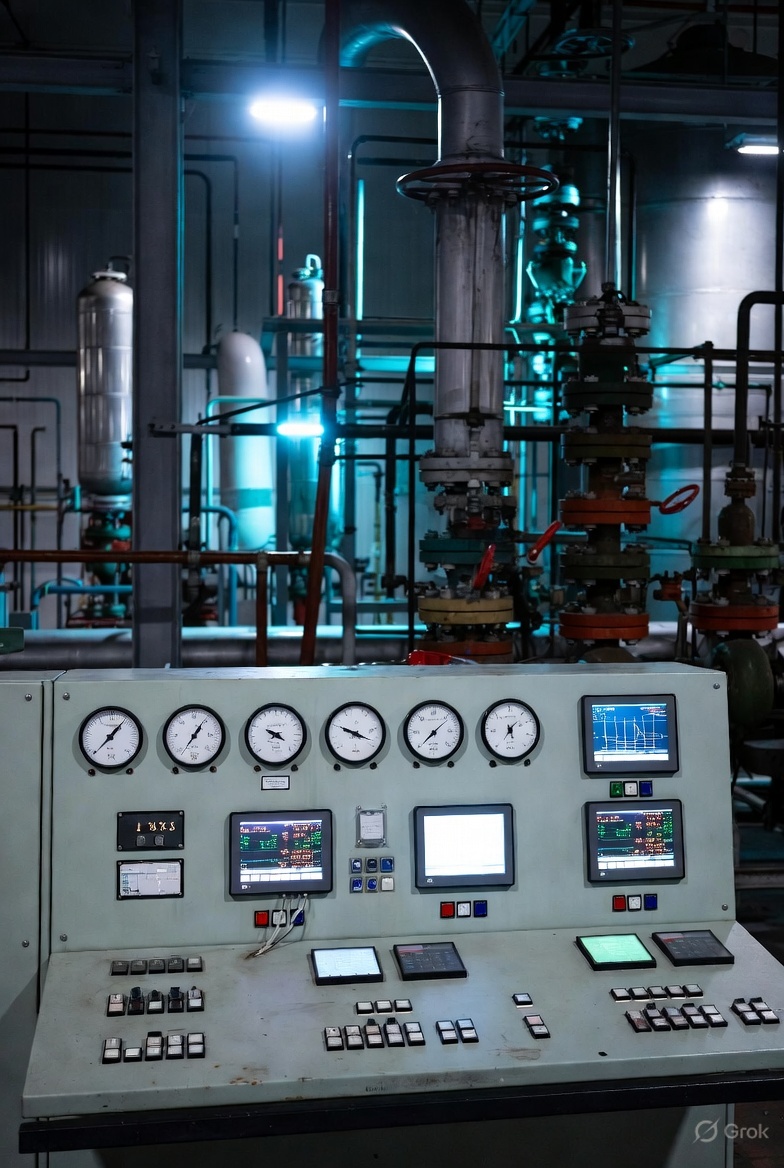
Reactive distillation requires careful control strategy design. Temperature profiles along the column indicate both separation efficiency and reaction progress.
Successful operation depends on:
Precise feed location optimization.
Stable reflux ratio management.
Reliable composition monitoring.
Careful startup sequencing.
Dynamic modeling during the design phase is critical. Operators must understand both reaction chemistry and distillation principles.
When managed correctly, reactive distillation can be stable and efficient. When poorly controlled, it can become sensitive to disturbances.
Economic Reality: The Final Decider
The true viability of reactive distillation lies in economics.
Capital costs may decrease because one integrated column replaces a reactor and distillation system. However, engineering design and catalyst systems may increase upfront investment.
Operating costs can decline due to energy savings and higher conversion. Yet maintenance complexity must be considered.
A thorough techno-economic analysis—accounting for feed variability, catalyst replacement frequency, and utility pricing—determines whether integration is worthwhile.
In large-scale commodity production, savings often justify implementation. In small specialty batches, flexibility may outweigh integration benefits.
The Strategic Future of Reactive Distillation
The future of reactive distillation will likely involve selective deployment rather than widespread standardization.
Potential growth areas include:
Sustainable ester production.
Bio-based intermediates.
Process retrofits aimed at energy reduction.
Hybrid systems combining membranes and reactive columns.
Rather than replacing conventional reactor–distillation sequences entirely, reactive distillation will serve as a powerful option within a broader process optimization toolkit.
Conclusion
Reactive distillation is not a universal breakthrough, nor is it an outdated concept. It is a highly effective solution under the right conditions. When reaction thermodynamics, volatility differences, and catalytic compatibility align, the technology delivers measurable benefits in energy efficiency, conversion, and plant simplification.
Its comeback is not driven by novelty, but by necessity—energy costs, carbon reduction targets, and the demand for intensified processes.
The lesson for modern chemical engineering is clear: reactive distillation succeeds not because it combines two operations, but because it aligns chemistry and separation in a mutually reinforcing way.
When applied thoughtfully and selectively, it transforms complexity into efficiency. When forced into unsuitable systems, it introduces more challenges than advantages.
In today’s competitive and sustainability-focused industrial landscape, reactive distillation makes sense precisely where science, thermodynamics, and economics converge.