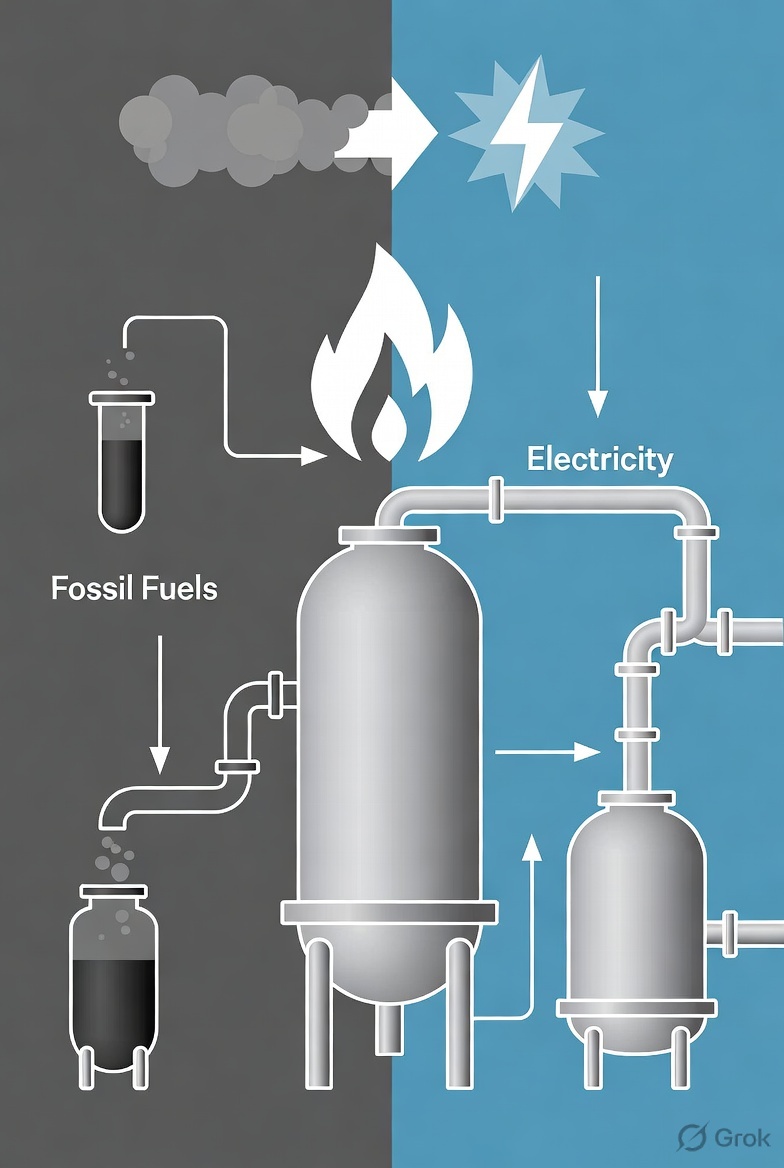
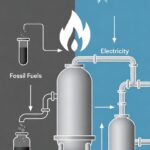



Decarbonization has emerged as a central pillar in global efforts to mitigate climate change and transition toward a sustainable future. With the rise in atmospheric carbon dioxide (CO₂) levels due to industrialization, fossil fuel consumption, and deforestation, the urgent need to reduce carbon emissions is undeniable. Decarbonization refers to the systematic reduction or complete elimination of carbon emissions from industrial processes, energy generation, and transportation systems. It is a multifaceted challenge that encompasses technological, economic, and policy dimensions. Among the innovative solutions for achieving decarbonization, electrocatalytic processes have gained substantial attention. These processes enable the transformation of CO₂ into valuable chemicals and fuels using electricity, ideally sourced from renewable energy. Electrocatalysis not only contributes to lowering carbon emissions but also promotes the concept of a circular carbon economy, where CO₂ is treated as a resource rather than a waste product. This article explores the principles, mechanisms, materials, applications, and challenges of electrocatalytic processes as a means of decarbonization.
1. The Concept and Importance of Decarbonization
Decarbonization is fundamentally about reducing the carbon intensity of human activities. Its goal is to transition from carbon-intensive energy sources, such as coal, oil, and natural gas, to low-carbon or carbon-neutral alternatives. The process involves several strategies:
Energy Efficiency: Optimizing industrial and energy systems to reduce wastage and improve operational performance. Efficient energy usage in chemical processes, manufacturing, and transportation can significantly lower carbon emissions.
Integration of Renewable Energy: Substituting fossil fuels with renewable energy sources such as solar, wind, hydroelectric, and geothermal energy. The decarbonization of the power sector is critical because electricity generation remains one of the largest contributors to global CO₂ emissions.
Carbon Capture and Storage (CCS): Capturing CO₂ emissions from point sources such as power plants and industrial facilities, and storing it in geological formations, deep saline aquifers, or depleted oil and gas reservoirs.
Carbon Capture and Utilization (CCU): Transforming captured CO₂ into value-added products, such as chemicals, fuels, and materials. This approach turns CO₂ into a feedstock, providing economic incentives for decarbonization.
The significance of decarbonization is underscored by global climate targets, particularly the Paris Agreement, which aims to limit global warming to below 2°C relative to pre-industrial levels. Achieving these targets requires a combination of technological innovation, policy intervention, and systemic shifts in energy and industrial practices.
2. Electrocatalysis: An Overview
Electrocatalysis refers to the use of catalysts to accelerate electrochemical reactions at electrodes. In the context of decarbonization, electrocatalysis is applied to the electrochemical reduction of CO₂ (CO₂RR) to produce useful chemicals and fuels. The fundamental advantage of electrocatalytic CO₂ conversion lies in its potential to store renewable energy in the form of chemical bonds, thereby creating a sustainable and carbon-neutral cycle.
Electrocatalytic CO₂ reduction can produce a wide range of products, including:
Carbon monoxide (CO)
Methanol (CH₃OH)
Formic acid (HCOOH)
Ethylene (C₂H₄) and other hydrocarbons
The selection of the electrocatalyst, electrolyte composition, and applied voltage are critical factors that determine the selectivity, efficiency, and yield of the desired products. By enabling the transformation of waste CO₂ into valuable compounds, electrocatalytic processes contribute both to carbon mitigation and to the creation of economic value.
3. Mechanism of Electrocatalytic CO₂ Reduction
The electrocatalytic reduction of CO₂ occurs at the cathode of an electrochemical cell, where CO₂ molecules gain electrons to form reduced products. The reaction generally proceeds through several stages:
Adsorption of CO₂: CO₂ molecules first bind to the surface of the electrocatalyst. The strength and nature of adsorption affect the reaction pathway and product distribution.
Electron Transfer: Electrons supplied by the cathode reduce the adsorbed CO₂ molecule. The applied potential drives this transfer, influencing the reaction rate and energy efficiency.
Intermediate Formation: Various reaction intermediates, such as *COOH, *CHO, or *HCOO, form on the catalyst surface. These intermediates are critical in determining the final products.
Desorption of Products: The final reduced products, such as CO, methanol, or hydrocarbons, detach from the catalyst surface and enter the solution or gas phase for collection.
The efficiency and selectivity of CO₂ reduction depend on several factors: the nature of the electrocatalyst, the surface structure and morphology, the type of electrolyte, the applied potential, and reaction temperature. Understanding these factors is crucial for designing effective electrocatalytic systems.
4. Electrocatalyst Materials
A central aspect of electrocatalytic processes is the design and selection of catalysts. Effective electrocatalysts should possess high activity, selectivity, and stability. Key classes of electrocatalyst materials include:
Metals:
Copper (Cu): Capable of reducing CO₂ into hydrocarbons and alcohols, including ethylene and ethanol.
Silver (Ag) and Gold (Au): Highly selective for CO production from CO₂.
Tin (Sn) and Bismuth (Bi): Favor formate (HCOO⁻) production with high selectivity.
Metal Oxides and Carbides:
Metal oxides can modify the electronic properties of catalysts and improve stability.
Carbides, such as molybdenum carbide (Mo₂C), have shown promising activity for CO₂ reduction under mild conditions.
Carbon-Based Materials:
Graphene, carbon nanotubes, and nitrogen-doped carbon materials serve as supports or active sites that enhance electron transfer and surface area.
Molecular Catalysts:
Transition metal complexes, such as cobalt or iron porphyrins, can catalyze CO₂ reduction with high specificity under mild conditions.
The development of new electrocatalysts is a vibrant research area, as it directly impacts the efficiency, selectivity, and scalability of electrocatalytic decarbonization.
5. Reactor Designs for Electrocatalytic Processes
The design of electrochemical reactors plays a critical role in maximizing the efficiency of CO₂ reduction. Common reactor configurations include:
H-type Cells: Laboratory-scale reactors where the cathode and anode compartments are separated by an ion-conducting membrane. Suitable for fundamental research.
Flow Cells: Continuous-flow reactors that allow CO₂ to pass over the catalyst surface, enabling higher current densities and improved mass transport.
Gas Diffusion Electrodes (GDEs): Facilitate the transport of CO₂ to the catalyst surface efficiently, reducing diffusion limitations.
Membrane Electrode Assemblies (MEAs): Compact designs used in large-scale applications to minimize resistive losses and enhance performance.
Optimizing reactor design is essential for industrial implementation, as it directly affects product yield, energy efficiency, and operational stability.
6. Integration with Renewable Energy
Electrocatalytic CO₂ conversion is most sustainable when powered by renewable electricity. Integration with solar, wind, or hydroelectric power offers multiple benefits:
Chemical Energy Storage: Excess renewable electricity can be stored in the form of chemical fuels, such as methanol or hydrocarbons.
Grid Balancing: Flexible operation of electrochemical systems allows them to absorb variable renewable energy outputs.
Carbon-Neutral Fuel Production: Fuels produced from CO₂ using renewable electricity can replace fossil fuels in transportation and industry, reducing net carbon emissions.
This integration is a critical component of a low-carbon energy ecosystem, enabling the dual benefits of renewable energy utilization and CO₂ mitigation.
7. Challenges and Future Directions
Despite its potential, electrocatalytic decarbonization faces several technical and economic challenges:
Catalyst Efficiency: Many catalysts require high overpotentials, resulting in energy losses. Research focuses on developing catalysts with lower overpotentials and higher selectivity.
Product Separation: Electrocatalytic reactions often produce mixtures of products, necessitating energy-intensive separation and purification.
Scalability: Translating laboratory successes to industrial-scale reactors is challenging due to mass transport limitations, energy requirements, and cost.
CO₂ Supply: Sufficiently pure and concentrated CO₂ must be available for efficient conversion.
Catalyst Durability: Long-term stability of catalysts under operating conditions is essential for commercial viability.
Future research directions include:
Development of multi-metallic or hybrid catalysts to improve selectivity and stability.
Optimization of flow reactors and gas diffusion electrodes for higher current densities.
Integration of CO₂ capture and electrocatalysis in a single process unit.
Exploration of photoelectrocatalysis, which combines solar energy with electrocatalysis for sunlight-driven CO₂ conversion.
8. Applications of Electrocatalytic Decarbonization
Electrocatalytic processes have wide-ranging applications in sustainable energy and chemical industries:
Fuel Production: Methanol, ethanol, and other hydrocarbons serve as renewable fuels, replacing fossil fuels.
Chemical Feedstocks: CO, formic acid, and other products can be used as precursors for polymer synthesis, pharmaceuticals, and fine chemicals.
Energy Storage: Renewable electricity is stored in chemical bonds, providing a scalable solution for grid-level energy storage.
Carbon Capture Utilization (CCU): Industrial CO₂ emissions are converted into valuable products, enabling a circular carbon economy.
These applications demonstrate the dual benefits of environmental mitigation and economic value creation.
9. Environmental and Economic Benefits
Electrocatalytic decarbonization offers several advantages:
Greenhouse Gas Reduction: Directly lowers CO₂ emissions, mitigating climate change.
Renewable Energy Utilization: Provides a pathway to store intermittent renewable energy.
Economic Value Creation: CO₂ is transformed from a waste product into valuable fuels and chemicals.
Decentralized Production: Enables localized chemical and fuel production, reducing transportation costs and associated emissions.
By integrating decarbonization with renewable energy and chemical production, electrocatalysis supports sustainable industrial and energy systems.
10. Conclusion
Decarbonization through electrocatalytic processes represents a convergence of chemical engineering, materials science, and renewable energy technology. By converting CO₂ into fuels and chemicals using electricity, preferably from renewable sources, these processes offer a pathway to sustainable and carbon-neutral industrial systems. The design of efficient electrocatalysts, advanced reactor configurations, and integration with renewable energy are central to the success of this technology.
Despite current challenges, including catalyst efficiency, product separation, scalability, and CO₂ availability, ongoing research and development are rapidly advancing the field. The potential of electrocatalysis lies not only in reducing greenhouse gas emissions but also in creating a circular carbon economy where CO₂ is a resource rather than a liability.
As global efforts toward carbon neutrality intensify, electrocatalytic decarbonization is poised to become a cornerstone technology. By addressing technological and economic challenges, improving catalyst performance, and scaling up reactor designs, electrocatalytic processes can transform CO₂ mitigation from a theoretical concept into a practical industrial reality. Chemical engineers, materials scientists, and energy researchers must collaborate to fully realize this potential, creating a sustainable and low-carbon energy and chemical landscape for the 21st century.
With continued innovation and policy support, electrocatalysis could provide a sustainable solution to the dual challenge of climate change and renewable energy storage, turning CO₂ from a problem into an opportunity for the chemical and energy industries.